

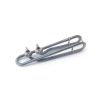

Joyonway 2.0KW Heater
£141.49 Inc VAT
9 in stock
Request a lead time
This part is on backorder. Send us your details and we will reply with the expected lead time.
♨️ Joyonway 2.0kW Spa Heater – 1.5″ Connections
💧 Product Overview
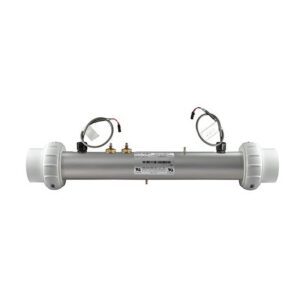
Joyonway 2.0kW flow-through spa heater. 291 mm tube, 80 mm diameter, 374 mm overall, 1.5 inch white plastic female sockets, 8.0–8.5 A at 230V.
Joyonway heaters are fitted throughout the imported hot tub market, which means a great many UK tubs are running one without the owner ever having heard the name. If the badge on your cabinet is a brand you cannot find parts for, it is worth checking whether the heater inside is a Joyonway.
The 80 mm body is the distinguishing feature — noticeably fatter than the 50 mm bodies used by LX and most others on the same 1.5 inch connections.
⚙️ Technical Specifications
| Product type | Heater assembly |
| Manufacturer | Joyonway |
| Output | 2.0KW |
| Voltage | 230V |
| Frequency | 50Hz |
| Current draw | 8.0-8.5A |
| Length | 291 mm |
| Overall length | 374 mm |
| Diameter | 80 mm |
| Plumbing connection | 1.5 inch white plastic female sockets |
⚡ Electrical Requirements
230V, 50Hz, drawing 8.0-8.5A. Fit the output the system was built for — the pack relay, internal wiring, supply cable and breaker were all sized for the original heater, so a higher output is an overload rather than an upgrade.
Electrical work on a hot tub must be carried out by a competent person. If you are not confident isolating the supply and working inside the control box, use a spa engineer.
🔄 Compatibility Guide
Match the physical part, not the badge on the cabinet. Output, connection type and overall length are what decide it — the same tub brands were built with different heaters across model years.
Not sure it is the right one? Do not guess. Send us a photo of the heater currently in your tub — in place, showing the connections and how the sensors are arranged — plus a clear shot of the control box label. We will confirm the fit before you order.
🛠️ Installation Requirements
- Isolate at the RCD or isolator and prove dead before you start.
- Drain to below heater level.
- Photograph the sensor connections, earth arrangement and cable routing before disconnecting anything.
- Undo both union collars and withdraw the heater.
- Fit new union gaskets. Gaskets are sold separately.
- Union collars: hand-tight plus a small nip. No wrenches on plastic.
- Prime the heater with water before switching on. A dry fire destroys the element in seconds and is not a warranty claim.
- Refill, purge air, restore power, and check both unions for weeps before closing up.
🔧 Maintenance Guide
- Keep pH in range. Sustained acidic water attacks the element sheath faster than anything else you can do to it.
- Control calcium hardness. Scale forms an insulating skin and the element then runs hot behind its own deposit.
- Rinse and replace filters. Restricted flow is the second most common heater killer after bad chemistry.
- Never shock dose with the circulation off. Neat chemical sitting against the element does real damage.
- Drain the heater fully if the tub is left unheated through a freezing spell.
❓ Frequently Asked Questions
My tub is an unbranded import. Could it have a Joyonway heater?
Very possibly. Photograph the heater in place and send it over — the 80 mm body and 1.5 inch unions are fairly distinctive and we can usually identify it from a picture.
Is it the same as an LX heater?
No. Similar role, different part. LX bodies are 50 mm on 1.5 inch connections; the Joyonway is 80 mm. They are not interchangeable.
Can I fit the 3.0kW instead?
Only if the tub was built for it. The pack and supply were sized for the original output.
It heats then cuts out. Is the heater faulty?
More often a flow problem. Check the filter, then the circulation pump, then look for air trapped in the line. A healthy heater will cut out repeatedly if it is not getting the flow it needs, and it looks identical to a fault.
Are gaskets included?
No. Order them alongside — refitting old union gaskets is the commonest cause of a weep after a heater change.
🏆 Genuine Parts, and Why It Matters Here
The heater is the one component sitting directly in chemically treated water at temperature, carrying full load current, inside a cabinet you never look into. It is the wrong place to save twenty pounds. What you pay the difference for cannot be photographed: element wall thickness, a properly brazed and sealed terminal end, and dimensional accuracy so it mounts without persuasion. When a pattern element fails to earth it trips the RCD and can weld the heater relay closed on the PCB — which turns a heater replacement into a heater and pack replacement.
🤝 Why Buy From Parts4Tubs
- ✅ Expert advice
- ✅ Local support
- ✅ Fast shipping
- ✅ Easy returns within 30 days
- ✅ Full warranty support
⭐ Summary
Joyonway 2.0kW Spa Heater – 1.5" Connections. 2.0KW, 291 mm, 1.5 inch white plastic female sockets. Send us a photo of your existing heater and we will confirm the fit before you order.
What is a flow thru hot tub heater?
A flow-through hot tub heater is a vital component designed to efficiently heat the water in your hot tub. Unlike traditional immersion heaters that are immersed directly in the water, a flow-through heater operates by heating the water as it passes through a heating element. This design offers several advantages, making it a popular choice among hot tub owners seeking effective and reliable heating solutions.
At parts4tubs.com, your premier online superstore for all things hot tub-related, including top-quality flow-through heaters, we understand the importance of a well-functioning heater in maintaining the optimal temperature of your hot tub. As a dedicated hot tub design consultant, I'm here to guide you through the process of selecting the right flow-through heater that suits your specific needs.
Flow-through heaters offer rapid heating capabilities, ensuring your hot tub reaches your desired temperature swiftly. Their design minimizes the risk of mineral buildup, which can often plague immersion heaters, thus contributing to their longevity and consistent performance. Furthermore, their efficient operation helps to keep energy costs in check, providing both comfort and cost-effectiveness.
With my expertise as a hot tub design consultant and the wide range of flow-through heaters available at parts4tubs.com, you can confidently choose the perfect heating solution to enhance your hot tub experience. Whether you're a seasoned hot tub enthusiast or a newcomer to the world of relaxation, our selection of flow-through heaters will ensure your hot tub is always ready for your enjoyment.
How does a flow thru hot tub heater work?
A flow-through hot tub heater operates on a simple yet effective principle: it heats the water as it flows through a heating element before returning it to the hot tub. This design ensures that the water is continuously heated to the desired temperature, providing a comfortable and enjoyable soaking experience. Let's delve into how a flow-through heater works:
- Water Circulation: The hot tub's pump is responsible for circulating water through the heating system. As you turn on the hot tub, the pump draws in water from the tub and sends it through the plumbing system.
- Heating Element: Inside the flow-through heater, there is a heating element made from materials like stainless steel or titanium. This element is designed to withstand the hot and corrosive environment of the hot tub.
- Temperature Control: The heating element is connected to a control system that regulates the temperature of the water. You can set the desired temperature on the hot tub's control panel, and the system will maintain that temperature by adjusting the heating element's operation.
- Water Flow: As the water flows through the heating element, it comes into direct contact with it. The element's electrical resistance generates heat, raising the water temperature.
- Heat Exchange: The heat generated by the heating element is transferred to the water. This process is highly efficient, ensuring that the water is heated quickly and effectively.
- Return to the Tub: Once the water has been heated to the desired temperature, it is returned to the hot tub through the jets or other outlets. The continuous circulation of heated water maintains a consistent and comfortable temperature throughout the hot tub.
- Monitoring and Safety: Flow-through heaters are equipped with safety features to prevent overheating. If the water temperature rises too high or if there's a malfunction, the system will shut off automatically to ensure your safety.
One of the notable benefits of a flow-through heater is its ability to rapidly heat the water. Since the heating element is in direct contact with the flowing water, there is minimal heat loss, leading to efficient and effective heating. Additionally, flow-through heaters are less prone to scale buildup compared to immersion heaters, which can extend the lifespan of the heater and reduce maintenance requirements.
When it comes to finding the right flow-through heater for your hot tub, parts4tubs.com, your trusted online source for hot tub components, offers a variety of options to suit your needs. As a hot tub design consultant, I'm here to assist you in selecting the perfect flow-through heater to enhance your hot tub experience.
What are the advantages of a flow thru hot tub heater?
flow-through hot tub heater, also known as a flow-thru heater, offers several distinct advantages that make it a popular choice for heating hot tubs. Here are some key benefits:
- Efficiency: Flow-through heaters are known for their high efficiency in heating water. The direct contact between the water and the heating element ensures rapid and effective heat transfer, minimizing energy wastage and reducing heating times. This efficiency translates to lower operating costs over time.
- Consistent Temperature: Flow-thru heaters provide precise temperature control, maintaining a consistent water temperature throughout your hot tub. This ensures a comfortable and enjoyable soaking experience every time you use your hot tub.
- Minimal Heat Loss: The design of a flow-through heater minimizes heat loss during the heating process. Since the water flows directly over the heating element, there is little opportunity for heat to dissipate before it reaches the tub. This results in quicker heating and less energy consumption.
- Reduced Scale Buildup: Flow-through heaters are less susceptible to scale buildup compared to immersion heaters. This is because the flowing water helps prevent mineral deposits from accumulating on the heating element. Reduced scale buildup prolongs the lifespan of the heater and reduces the need for frequent maintenance.
- Compatibility: Flow-thru heaters are versatile and compatible with various hot tub models and configurations. They can be integrated into most hot tub systems, making them a convenient choice for both new installations and replacements.
- Reliability: Flow-through heaters are known for their durability and longevity. The heating element is constructed from materials that can withstand the hot and humid conditions of a hot tub environment. This durability ensures a reliable and consistent heating performance over time.
- Safety: Most flow-thru heaters are equipped with safety features, such as automatic shut-off mechanisms to prevent overheating. These safety measures provide peace of mind while using your hot tub.
- Ease of Installation and Replacement: Installing or replacing a flow-through heater is often straightforward, especially when compared to more complex heating systems. This makes maintenance and repairs relatively hassle-free.
- Compact Design: Flow-thru heaters have a compact and space-efficient design, which can be particularly advantageous for hot tubs with limited installation space.
- Customization: Many flow-thru heaters offer customizable temperature settings, allowing you to adjust the water temperature to your preferences.
Overall, a flow-through hot tub heater offers a combination of efficiency, reliability, and ease of use that makes it a popular choice among hot tub owners. As a leading online supplier of hot tub components, parts4tubs.com is committed to providing a wide range of flow-through heaters and related parts to enhance your hot tub experience.
How do I replace a flow thru hot tub heater?
Replacing a flow-through hot tub heater involves several steps. While the process can vary slightly depending on your specific hot tub model and the heater design, here's a general guide to help you through the replacement process:
- Safety First: Before you begin, make sure the power to the hot tub is completely turned off. This is crucial to prevent electrical hazards.
- Gather Tools and Materials: Collect the necessary tools and materials for the replacement, including a screwdriver, wrenches, replacement flow-through heater, gaskets, and any other components specific to your hot tub model.
- Drain the Hot Tub: Ensure the hot tub is completely drained before proceeding. Follow the manufacturer's instructions for draining your hot tub.
- Access the Heater Compartment: Locate the heater compartment in your hot tub. This is typically located near the equipment area. Depending on your hot tub model, you may need to remove access panels or covers to reach the heater.
- Disconnect Electrical Connections: Carefully disconnect the electrical connections from the existing heater. This includes disconnecting any wiring or plugs that are connected to the heater terminals.
- Disconnect Water Lines: Next, disconnect the water inlet and outlet connections from the heater. You might need to use wrenches to loosen and remove any fittings.
- Remove the Old Heater: Unscrew or detach any mounting brackets or fasteners securing the old heater to the hot tub. Carefully slide out the old heater from its compartment.
- Prepare the New Heater: Before installing the new flow-through heater, ensure that it is the correct size and type for your hot tub. If necessary, attach any necessary fittings, gaskets, or adapters to the new heater.
- Install the New Heater: Carefully slide the new heater into the compartment, aligning it with the mounting brackets or fasteners. Make sure the electrical connections match the appropriate terminals on the new heater.
- Reconnect Water Lines: Attach the water inlet and outlet connections to the new heater. Use wrenches to tighten the fittings securely, ensuring there are no leaks.
- Reconnect Electrical Connections: Carefully reconnect the electrical connections, ensuring that the wiring is securely attached and properly connected to the corresponding terminals. Double-check the connections to ensure they are tight and properly insulated.
- Secure the Heater: Fasten the new heater in place using the provided brackets or fasteners. Make sure it is stable and properly aligned.
- Fill and Test: Ffill the hot tub with water and test the new heater. Monitor the water temperature to ensure it is heating properly.
- Replace Access Panels: Once you're satisfied with the heater's performance, replace any access panels or covers that were removed.
- Final Checks: Perform a final inspection to ensure everything is properly connected, secure, and functioning as expected.
- Turn on Power: Restore power to the hot tub and set the desired temperature. Your new flow-through heater should now be ready to provide efficient and reliable heating for your hot tub.
What is an alternative to a flow thru hot tub heater?
An alternative to a flow-through hot tub heater is an immersion heater. Immersion heaters are also known as submersible heaters or electric heaters. Unlike flow-through heaters, which heat the water as it passes through a heating element, immersion heaters are placed directly into the hot tub water and heat it from within. Here's a brief overview of immersion heaters and their benefits:
Immersion Heater:
An immersion heater consists of a heating element encased in a protective sheath. The heater is designed to be submerged directly in the hot tub water. When connected to a power source, the heating element heats up, transferring heat to the water and raising its temperature.
Benefits of Immersion Heaters:
- Ease of Installation: Immersion heaters are relatively easy to install. They do not require complex plumbing connections like flow-through heaters, making them a convenient option for retrofitting or replacing a heater.
- Cost-Effective: Immersion heaters are often more affordable than flow-through heaters. They have a simpler design and do not require additional plumbing components.
- Versatility: Immersion heaters can be used in a variety of hot tub sizes and configurations. They are available in different wattages to suit your specific heating needs.
- Maintenance: Immersion heaters are generally easy to maintain. They can be removed from the water for cleaning and maintenance, and replacement is straightforward if needed.
- Energy Efficiency: Immersion heaters can be efficient in terms of energy usage, as they directly heat the water without the heat loss associated with some flow-through heaters.
Considerations:
While immersion heaters offer several advantages, there are some factors to consider:
- Space: Immersion heaters take up space within the hot tub, which could affect seating arrangements or water circulation.
- Heating Time: Immersion heaters might take longer to heat the entire hot tub compared to flow-through heaters, which can impact your overall heating efficiency.
- Safety: Proper placement and installation of the immersion heater are crucial to prevent contact with bathers and ensure safe operation.
Ultimately, the choice between a flow-through heater and an immersion heater depends on your specific needs, hot tub setup, and preferences.
You may also like…
Control Boxes, Spa Packs & Topside Controls

Control Box Only
Joyonway P20B29 Control Box – Complete Multi-Pump Spa Control System
Related products
Heating

Balboa Heaters
Heating

Davey / Spa Power

Gecko Heaters

Balboa Heaters